
Why Do Dogs Need Brain Games? A Complete Guide
Table of Contents
- Why Do Dogs Need Brain Games? The Science of Mental Stimulation
- Puzzle Toys for Dogs: Choosing the Right Challenge
- Non-Food Enrichment Activities for Dogs: Beyond Treats
- A Step-by-Step Plan for Introducing Brain Games for Dogs
- Tailoring Games by Age, Breed, Ability, and Health
- Safety, Supervision, and When to Seek Professional Help
- Frequently Asked Questions
Last Updated: October 17, 2026
Why Do Dogs Need Brain Games? The Science of Mental Stimulation
Dogs need brain games because their minds need work, not just their legs. A walk tires the body, but problem-solving tires the brain.
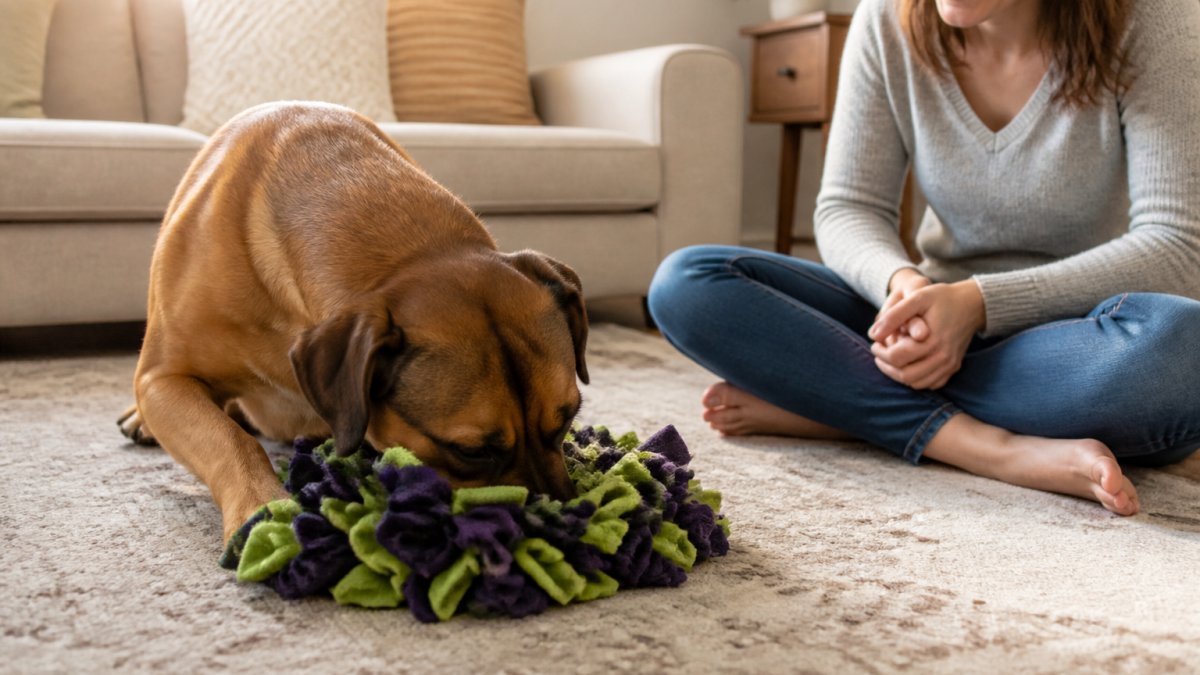
That gap is where brain games earn their keep.
Mental stimulation for dogs is any activity that asks the dog to think: sniff out a treat, work out how a puzzle opens, or track a scent trail across a yard.
How Mental Stimulation Tires Dogs Out
Thinking is real work. A dog solving a food puzzle is processing scent, memory, and motor control at once. Many owners find that ten minutes of focused sniffing or problem-solving leaves a dog calmer than a longer walk.
That is why trainers often call this "mental fatigue." It settles a dog in a way plain exercise sometimes cannot.
The Link Between Boredom and Destructive Behavior
A bored dog is not a bad dog. Boredom is an energy problem looking for an outlet.
When that outlet is missing, dogs find their own:
- Chewing furniture, shoes, or door frames
- Digging up the yard or the couch cushions
- Barking at nothing for long stretches
- Pacing, whining, or clinging
These are anxiety-related behaviors fueled by unused energy. Give the dog a job, and the job replaces the damage.
(/collections/enrichment), scent games || High (working breeds) | 3-4 sessions | Tug, fetch, hard puzzles |
High-energy dogs also need physical exercise on top of this. Brain games add to a walk; they do not replace it.
Puzzle Toys for Dogs: Choosing the Right Challenge
The best puzzle toys for dogs match your dog's current skill level, not their ambition. Too easy and the dog quits. Too hard and the dog gives up frustrated.
Start simple, then add difficulty as your dog gets faster. A useful progression is: nose-only (snuffle or scatter) → paw-and-nose (slider or flip puzzles) → multi-step (lidded compartments, removable blocks) → problem-solving with a moving part (treat dispensers that roll or tip).
A Practical Selection Checklist
Before you buy or hand over any puzzle, run through these checks:
- Solvable in stages. The toy should have at least two difficulty settings or removable parts so it can grow with your dog.
- No swallowable pieces. Anything smaller than your dog's mouth that can detach is a choking hazard. Tug and pull on every part before first use.
- Appropriate material for your chewer. Soft fleece and fabric puzzles suit gentle mouths. Match the material to how your dog actually plays, not how you hope they will.
- Easy to clean. Food residue builds bacteria fast. Fully hand-washable designs save you from a smelly toy and a sick dog.
- Size-appropriate. A toy too small for a large dog invites swallowing; a toy too large for a small dog is frustrating to manipulate.
Adjustable Difficulty and Safety Features
Look for toys that grow with your dog. Our Adjustable Slow-Feed Treat Dispenser has three different hole sizes and a removable inner tube divider, so you can control how fast treats release. It is $7.99 and built for puppies and seniors alike.

Safety matters just as much. Check for:
- No small parts that can break loose
- Materials gentle on teeth and gums
- A size too big to swallow
- Easy cleaning so bacteria does not build up
Supervising Puzzle Play Without Killing the Fun
Supervision is not hovering, it is staging. Set the toy down, stay nearby, and watch the first two or three attempts. If your dog walks away, do not coax; end the session and try again later. If your dog starts biting or tearing at the toy rather than solving it, that is a sign the challenge is too hard or the material is wrong for their play style.
Non-Food Enrichment Activities for Dogs: Beyond Treats
Not every brain game needs a treat. Non-food enrichment activities for dogs use sniffing, movement, and play to work the mind, which matters for dogs on weight management or with food sensitivities.
Scent Work, Tug, and Fetch Games
Scent work is the easiest win. Hide a toy or a bit of kibble and let your dog hunt by nose. Sniffing is deeply calming for dogs.
Adjustable Slow-Feed Treat Dispenser for Puppies and Seniors | Durable →
Tug and fetch add movement and teamwork. Our Snuffle Ball does all three: hide treats in the fleece for sniffing, grab the fleece strands and turn the Snuffle Ball into an engaging game of tug, or toss it for fetch.

Try these this week:
- Hide-and-seek with a favorite toy
- A kibble scatter across the lawn
- A cardboard box maze with treats inside
- Shell game with cups and a treat
A Step-by-Step Plan for Introducing Brain Games for Dogs
Introduce brain games slowly, and let your dog win early. The goal in week one is fun, not difficulty. Here is our step-by-step plan.
- Pick one easy game. Choose a puzzle your dog can solve easily.
- Show them how it works. Let your dog watch you hide a treat.
- Let them succeed. Reward the first attempt, even a clumsy one.
- Add difficulty slowly. Move up only when your dog solves it fast.
- Keep sessions short. Five to ten minutes, then stop while it is still fun.
- Rotate games. Swap toys and activities to keep things fresh.
- Track what works. Note which games your dog loves and which they ignore.
Common Mistakes to Avoid
A common mistake is starting too hard. A frustrated dog learns to quit. Another is leaving the same toy out for weeks, which kills the novelty. And many owners forget to supervise, which is when toys get chewed apart.
Tailoring Games by Age, Breed, Ability, and Health
One plan does not fit every dog. A puppy, a senior, and a high-drive working breed need different challenges. Tailor the game to the dog in front of you, and adjust as their body and brain change. This is the part most generic guides skip, and it is where owners get the most value.
Puppies (Under 1 Year)
Puppies tire quickly and mouth everything. Keep sessions to 3 to 5 minutes, two or three times a day. Favor soft fleece puzzles, frozen snuffle balls for teething gums, and scatter feeding on a towel. Avoid hard plastic puzzles with small parts until you know your puppy's chewing style. The goal at this stage is building the habit of trying, not solving.
Seniors (Typically 7+ Years, Earlier for Large Breeds)
Senior dogs benefit enormously from mental work, but their bodies set limits. Use gentle sniffing games, slow feeders, and floor-level puzzles that do not require jumping or crouching. Sessions of 5 to 10 minutes are plenty. Watch for stiffness or reluctance to lower the head, if you see it, switch to a raised or nose-only game.
High-Drive and Working Breeds
Herding, retrieving, and terrier breeds were bred to solve problems alongside people. They need harder puzzles, scent work with multiple hides, and tug or fetch that includes a thinking component (find the toy, then tug). Three to four short sessions a day is realistic for these dogs, and brain games should sit alongside, not replace, real physical exercise.
Dogs With Mobility Limits or Health Conditions
For dogs with arthritis, injury recovery, or vision loss, choose games that work at floor level and rely on scent rather than sight. Snuffle mats, scatter feeding, and nose-work with a favorite toy are all low-impact. If your dog is on a weight-management plan or has food sensitivities, use non-food games or portion out kibble from their daily ration rather than adding extra treats.
Dogs With Different Play or Food Preferences
Not every dog is food-motivated. Toy-driven dogs will work for a tug or a ball; scent-driven dogs will work for a hidden item; social dogs will work for your attention.
Our Ultimate Puppy Enrichment & Teething Pack bundles soft fleece tug toys, freezer-ready snuffle balls, and a treat dispenser for exactly this stage.

Safety, Supervision, and When to Seek Professional Help
Safety comes first with any new toy or game. Supervise until you know how your dog plays, inspect toys for wear, and remove anything torn. For heavy chewers, choose sturdier options and check them often.
Watch for signs a game is working: a calmer dog, less chewing, better focus, and a dog that settles after play. If destructive behavior continues or gets worse, or you see signs of real distress, talk to your veterinarian or a certified trainer.
Frequently Asked Questions
What brain games can I play with my dog?
Try hide-and-seek with treats, snuffle mats, puzzle toys, and scent games. You can also play tug, fetch, or teach new tricks. Rotate games to keep them interesting and match difficulty to your dog's skill level. Always supervise, especially with new toys.
How much mental stimulation does a dog need each day?
Most dogs benefit from focused mental stimulation daily, but this varies by age, breed, and energy level. High-energy dogs may need more, while seniors or puppies need shorter sessions. Watch for signs of fatigue and adjust accordingly. A good rule is to end sessions while your dog is still engaged.
Are puzzle toys good for dogs?
Yes, puzzle toys provide mental exercise, reduce boredom, and can help curb destructive behavior. They also build confidence as dogs solve problems. Choose toys with adjustable difficulty and safe materials. Always supervise initial use and check for wear. Puzzle toys are not a substitute for physical exercise but complement it well.
Can brain games help reduce boredom-related behavior?
Absolutely. Boredom often leads to chewing, digging, and barking. Brain games give dogs a productive outlet for their energy and instincts. By providing mental stimulation, you can reduce unwanted behaviors and promote calmer behavior. Consistency is key; incorporate games into your daily routine.
A tired body is not always a calm dog. If your dog chews, digs, or paces despite plenty of walks, the missing piece may be mental work. At Chelsy's Toys, we make handmade enrichment toys built to engage the brain and hold up to real play, backed by our 30-day happy-dog guarantee. Explore our patented designs, from tug toys to treat dispensers, and give your dog a job worth doing. Shop Enrichment Toys and watch the calm follow.