

How to Keep Dog Occupied While Working: 7 Steps
Table of Contents
- Why Keeping Your Dog Occupied While Working Matters
- Step 1: Establish a Consistent Morning Routine Before Work
- Step 2: Provide Mental Stimulation for Dogs Throughout the Day
- Step 3: How to Tire Out a Dog Before Work
- Step 4: Set Up Interactive Dog Toys for Boredom Relief
- Step 5: Create a Safe, Dog-Proof Work Environment
- Step 6: Use Crate Training and Designated Rest Spaces
- Common Mistakes to Avoid
- Frequently Asked Questions
Last Updated: September 30, 2026
Why Keeping Your Dog Occupied While Working Matters
Your dog's behavior during your workday directly impacts both their wellbeing and your ability to focus. A bored dog doesn't simply nap quietly, they find ways to entertain themselves, often destructively. Chewing furniture, shredding cushions, or excessive barking becomes their default when mental stimulation is absent. This guide from Chelsy's Toys covers proven strategies to keep dog occupied while working, reducing destructive behavior and building a calmer, more confident pet.

Most dogs were bred to work, hunt, or herd. Without appropriate outlets for this energy, problem behaviors emerge. Structured enrichment before work, combined with interactive toys, tires your dog mentally and physically, making settling during your workday feel like a natural reward.
Chelsy's Toys designs enrichment solutions engineered to engage your dog's problem-solving instincts and provide hours of independent engagement. Here are the seven steps that work.
Step 1: Establish a Consistent Morning Routine Before Work
A structured morning routine signals work time is coming and primes your dog to accept the transition calmly. Consistency trains your dog's brain to expect what comes next.
Start with a 15-30 minute walk or play session, then a meal, then 5-10 minutes of training. This mental work tires dogs faster than physical activity alone and reduces separation anxiety.
Offer a high-value enrichment toy immediately before you leave. This creates a positive association with your departure, making it a trigger for reward rather than stress.
Step 2: Provide Mental Stimulation for Dogs Throughout the Day
Mental stimulation exhausts dogs faster than physical exercise alone. A 30-minute puzzle session can leave your dog more satisfied than a 90-minute walk.
Interactive toys activate your dog's natural foraging instincts. Hide treats inside toys, vary difficulty, and rotate toys daily to engage their mind in ways they're genetically wired for.
The Chelsy's Toys 3-in-1 Bundle combines a tug toy, treat-dispensing tube, and snuffle ball. The adjustable insert lets you control difficulty, starting easy for quick wins, then increasing complexity as your dog learns.

Scent work is powerful: hide treats in puzzle toys or snuffle balls so your dog spends 20-30 minutes using their nose. This provides focused engagement that leaves them calm for hours.
Step 3: How to Tire Out a Dog Before Work
Pre-work exercise is your most powerful tool for managing behavior. A properly exercised dog is far more likely to rest while you work.
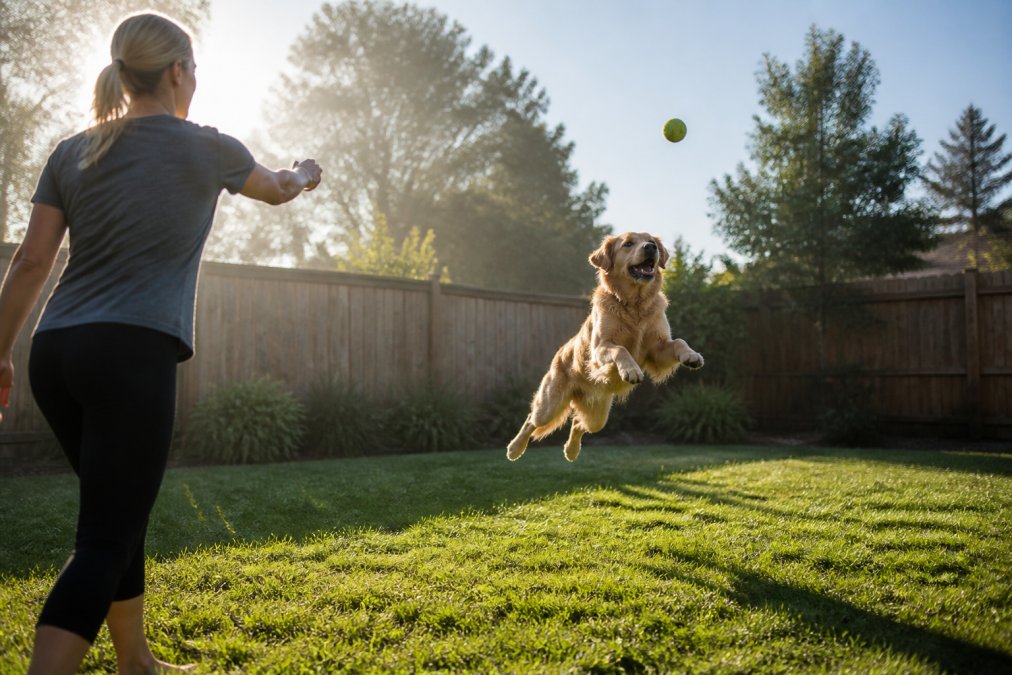
High-energy breeds need 45-60 minutes of structured activity: a 20-minute walk, 15 minutes of fetch, 10 minutes of training, and 5 minutes of tug play. Variety engages different muscle groups and mental states.
Exercise your dog 30-60 minutes before leaving for work, allowing their heart rate to return to normal. Exercising immediately before departure can trigger anxiety.
For dogs with lower exercise tolerance (seniors, small breeds, or those with health conditions), shorter, more frequent sessions work better than one long session. Three 10-minute sessions spread throughout the morning achieve better results than one 30-minute marathon.
Step 4: Set Up Interactive Dog Toys for Boredom Relief
Interactive toys are the foundation of how to keep dog occupied while working. These aren't passive toys your dog chews mindlessly, they're engagement tools that require participation and problem-solving. The right toy keeps your dog mentally engaged for 2-4 hours, which covers a significant portion of your workday.
Treat-dispensing toys are particularly effective. Your dog must manipulate the toy to access the reward, creating a feedback loop: effort → success → reward. This satisfies their need for accomplishment. The Chelsy's Toys Adjustable Slow-Feed Treat Dispenser features three hole sizes and a removable divider, letting you customize difficulty. Start with the largest holes so your dog experiences quick wins. As they learn, reduce hole size to extend the challenge.
Snuffle balls engage your dog's most powerful sense: smell. Hide kibble or small treats throughout the fleece, and your dog spends 20-30 minutes using their nose to locate each piece. This mirrors natural foraging behavior and provides the kind of deep mental engagement that leaves them satisfied for hours. The Chelsy's Toys Snuffle Ball can be frozen for extra challenge or rotated between different treat types to maintain novelty.
3-in-1 Bundle Enrichment Tube for Dogs →

Tug toys serve a different purpose, they satisfy the drive to pull and shake. While less mentally demanding than puzzle toys, they're valuable for interactive play before work and can extend engagement time when rotated with other toys throughout the day.
The key strategy: rotate toys daily. If your dog sees the same toy every day, novelty wears off and engagement drops. A four-toy rotation means each toy reappears every four days, maintaining freshness. Your dog's interest in the Snuffle Ball on Monday is higher because they haven't seen it since Thursday.
Step 5: Create a Safe, Dog-Proof Work Environment
Your dog's safety during unsupervised time depends on environmental design. A dog-proof workspace prevents destructive behavior before it starts and eliminates hazards that could cause injury or ingestion of harmful materials.
Start by identifying what your dog can access. Electrical cords, toxic plants, cleaning supplies, medications, and small objects all pose risks. Create a designated area, a bedroom, bathroom, or gated section of your home, where your dog spends work hours. This containment reduces the temptation to investigate forbidden areas and keeps them in a space you've already safety-checked.
Remove temptation. If your dog has chewed baseboards before, those baseboards are still tempting. Block access or apply deterrent sprays. If they've raided the trash, keep the trash behind a closed door. Prevention is more effective than correction.
Provide appropriate outlets for natural behaviors. Dogs have an instinct to chew, dig, and shred. Rather than punishing these behaviors, redirect them to appropriate toys. The Chelsy's Toys 3-in-1 Bundle gives your dog multiple engagement options, tug, puzzle-solve, and snuffle, all within one toy, reducing the appeal of furniture or baseboards.
Temperature and comfort matter. Ensure your dog's space is cool enough (especially for thick-coated breeds), has access to water, and includes a comfortable resting spot. A dog that's too hot or uncomfortable will engage in destructive behavior out of stress, not boredom.
Step 6: Use Crate Training and Designated Rest Spaces
Crate training isn't confinement, it's creating a safe den where your dog chooses to rest. A properly introduced crate becomes your dog's sanctuary, a place where they feel secure and calm. This is particularly valuable during work hours.
The introduction process takes time. Never force your dog into a crate or use it as punishment. Instead, make the crate appealing: toss treats inside, leave the door open, let your dog explore at their own pace. Feed meals inside the crate. Once your dog enters willingly, start closing the door briefly while they eat, then gradually extend the duration.
Only use the crate once your dog is comfortable inside. A dog that's anxious in a crate will bark, scratch, or attempt escape, increasing stress and potentially causing injury. This is why gradual introduction matters.
Designated rest spaces work alongside crate training. A specific corner with a comfortable bed, blanket, or dog mat becomes your dog's "place." Train this using positive reinforcement: guide your dog to the spot, reward them for settling, gradually increase duration. During work hours, your dog learns that their designated space is where calm behavior happens.
Combine these tools with enrichment toys.
Common Mistakes to Avoid
Most dog owners make predictable errors when trying to keep their dog occupied while working. Understanding these mistakes helps you avoid wasting time and money on ineffective strategies.
Frequently Asked Questions
Can I leave my dog alone for 8 hours while I work?
Most adult dogs can physically manage 8 hours alone, but without enrichment and mental stimulation, they're likely to develop destructive behavior, separation anxiety, or excessive barking. The key is preparation: tire them out before you leave, provide interactive dog toys for boredom, and establish a consistent routine. Puppies and senior dogs may struggle longer than 4-6 hours. Consider a dog walker, daycare, or neighbor check-in to break up the day if possible.
How much mental stimulation does a dog need daily?
Most dogs need 30-60 minutes of mental stimulation daily, depending on breed and energy level. High-energy and working breeds may need more. Mental stimulation can come from puzzle toys, scent work, nose games, foraging activities, and training sessions. A 10-minute snuffle ball session can tire a dog as much as a 30-minute walk because it engages their problem-solving skills. Rotating enrichment activities keeps your dog engaged and prevents boredom.
What's the difference between a treat-dispensing toy and a regular toy?
Treat-dispensing toys reward your dog for problem-solving, which keeps them mentally engaged and busy longer. Regular toys are often destroyed quickly or ignored. Treat dispensers like the 3-in-1 Enrichment Tube encourage your dog to work for their reward, satisfying their natural foraging instincts while reducing destructive behavior. They're especially effective for dogs left alone during work hours because the challenge keeps them focused on a productive task rather than chewing furniture.
How do I know if my dog has separation anxiety versus regular boredom?
Boredom leads to destructive chewing, excessive barking, or digging. Separation anxiety involves panic behaviors like pacing, whining before you leave, or destructive behavior only when you're gone. With anxiety, your dog may follow you constantly or show stress signs. Both respond to enrichment and routine, but separation anxiety may need additional help like gradual habituation, calming techniques, or professional guidance. Starting with mental stimulation and a consistent schedule often helps both conditions.