

Safe Enrichment Toys for Teething Puppies: 2026 Guide
Table of Contents
- Why Safe Enrichment Toys Matter for Teething Puppies
- Safe Chew Toys for Puppies: Materials and What to Avoid
- Non-Toxic Puppy Teething Toys: Top Toy Types
- Puppy Food Puzzle Toys: Enrichment That Engages
- How to Choose Puppy Toys by Size and Chewing Strength
- Toy Safety Inspection Checklist and Maintenance
- Creating an Enrichment Rotation Schedule
- When Destructive Chewing Needs Veterinary Attention
- Frequently Asked Questions
Last Updated: October 5, 2026
Why Safe Enrichment Toys Matter for Teething Puppies
Teething puppies need tools that protect their developing teeth while keeping their brains engaged. Safe enrichment toys for teething puppies soothe sore gums and redirect destructive energy away from furniture, shoes, and household items. During teething, puppies experience real discomfort as baby teeth fall out and adult teeth push through, and the right toy can mean the difference between a calm puppy and one that destroys your home.
The challenge is finding one durable enough for aggressive chewing, soft enough for tender gums, and engaging enough to hold a puppy's attention. Many owners buy generic toys only to find they're too hard for young puppies or shred into choking hazards.
The stakes are real: a toy with small parts, loose threads, or toxic materials can cause intestinal blockages, poisoning, or choking, while a toy that's too soft or boring won't provide the mental stimulation puppies need. This guide covers how to choose safe enrichment toys for teething puppies, what materials work, and how to inspect and rotate toys.
Safe Chew Toys for Puppies: Materials and What to Avoid
Non-Toxic Materials That Work
Non-toxic, food-grade materials are essential because puppies will inevitably ingest small pieces as they chew. Look for soft fleece, natural rubber, or other materials labeled BPA-free, phthalate-free, and lead-free.
Soft fleece is ideal for teething puppies: gentle on sensitive gums yet satisfyingly resistant. Inspect for dense, solid construction, not loose or fraying seams.
Materials to Avoid
Certain materials should never be given to teething puppies. Avoid loose buttons, bells, or small decorative parts that detach and become choking hazards. Cheap plastic toys often contain phthalates and BPA that leach into your puppy's system as they chew.
Rawhide softens as puppies chew and can form a gummy mass in the throat or intestines. Thin rope construction sheds fibers that accumulate in the digestive system.
Avoid sharp edges, hard plastic components, or anything that splinters easily. If a toy smells strongly of chemicals or feels sticky, it's not safe. If you wouldn't put it in your own mouth, don't give it to your puppy.
Non-Toxic Puppy Teething Toys: Top Toy Types
Soft Fleece Tug Toys for Gentle Teething
Soft fleece tug toys are designed for puppies with sensitive gums, providing gentle massaging action on sore gums.
The Chelsy's Toys Patented Fleece Tug Toy ($16.99) uses Fletch Technology™, over 150 interlocking knots that hold together through aggressive play, with rope-free construction so there are no loose fibers to ingest. Saturate and freeze it before supervised play for cooling teething relief. It's machine washable.
The Ultimate Puppy Enrichment & Teething Pack ($99.24 with coupon code HAPPYPUPPY for 50% off) includes five soft fleece tug toys for tender gums. These 12"x2" tugs are gentle yet satisfyingly resistant, plus the bundle adds snuffle balls and a treat dispenser for rotation variety.

Frozen Toys and Cold Chews for Sore Gums
Cold therapy is one of the most effective ways to soothe teething discomfort, reducing inflammation and providing temporary pain relief. Choose a toy that's safe when frozen and won't crack or become brittle.
Soft fleece toys are ideal for freezing because they keep their structure without becoming dangerously hard. The Chelsy's Toys Snuffle Ball ($12.99) can be saturated and frozen for soothing teething play. The fleece is gentle on teeth while offering plenty of texture.
Saturate the toy with water first so it's cold throughout, not just on the surface. Offer frozen toys only for supervised play, never in the crate unsupervised, since puppies may bite too hard and crack teeth on hard frozen surfaces. Rotate between freezer and regular playtime for variety.
Snuffle Balls for Scent Work and Mental Stimulation
Snuffle balls engage a puppy's foraging instincts and provide mental stimulation that tires them faster than physical play alone. The Chelsy's Toys Snuffle Ball ($12.99) is versatile: hide treats throughout the fleece, tuck kibble into the center, or let your puppy sniff and search.
Its fleece construction and center knot system let you customize play: fetch, interactive tug, or freeze it for teething relief. The soft fleece is gentle on teeth and gums, and it's machine washable.
For puppies, 10-15 minutes of snuffle play is especially valuable for young puppies whose developing joints shouldn't handle extended running or jumping.
Puppy Food Puzzle Toys: Enrichment That Engages
Food puzzle toys turn treat time into problem-solving sessions. Instead of eating quickly and getting bored, puppies work to extract treats, engaging their brain and extending the entertainment value, which is especially effective for redirecting destructive chewing.
The Adjustable Slow-Feed Treat Dispenser for Puppies and Seniors ($7.99) has three hole sizes and a removable inner tube divider to control treat release. The inner tube is lined with food-grade materials, and adjustable difficulty lets you start easy for young puppies and increase the challenge as they grow.

The 3-in-1 Bundle Enrichment Tube for Dogs ($34.99) combines a tug toy, treat dispenser, and snuffle ball. The tube becomes an engaging treat puzzle with an adjustable insert for tailored difficulty, giving you multiple enrichment options in one product for daily rotation.
How to Choose Puppy Toys by Size and Chewing Strength
Matching Toy Firmness to Your Puppy
Not all puppies chew with the same intensity. Match toy firmness to your puppy's chewing style and mouth strength.
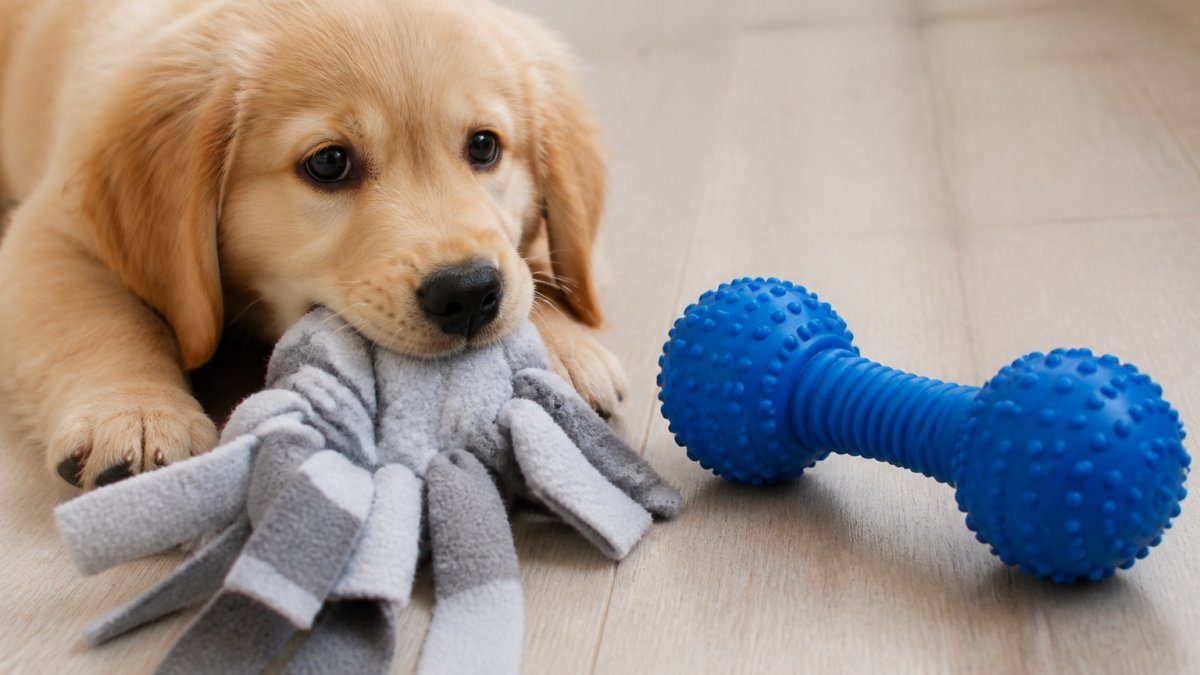
Very soft toys suit puppies under 12 weeks or those with sensitive gums from active teething. Soft fleece tugs and plush snuffle balls fit here.
The Ultimate Puppy Enrichment & Teething Pack | Gentle, engaging, and designed →
Many owners give a power chewer a soft toy and expect it to last. Power chewers need reinforced construction and interlocking knot systems like the Chelsy's Toys Patented Fleece Tug Toy, with over 150 interlocking knots built for aggressive play.
Size Guidelines for Different Breeds
Toy size matters for safety and engagement: too small is a choking hazard, too large is frustrating and won't hold interest.
Small breeds (under 10 lbs as adults): the Chelsy's Toys Snuffle Ball at 8" round fits well. Medium breeds (10-40 lbs): 8-12" toys, like the 12"x2" soft fleece tugs. Large breeds (over 40 lbs): 12" or larger toys that withstand aggressive chewing.

Toy Safety Inspection Checklist and Maintenance
Inspect toys regularly. Small tears become large holes quickly under aggressive chewing, and loose seams, fraying edges, or separating pieces mean discontinue use immediately.
Weekly Inspection Checklist:
- Check all seams for loose threads or separation
- Look for small tears or holes that could expand
- Feel for loose parts, buttons, or decorative elements
- Smell for chemical odors indicating breakdown
- Test structural integrity by gently tugging on different areas
- Verify no pieces are missing or broken off
- Ensure no mold or mildew is present (especially on frozen toys)
Replace toys that fail any check; a damaged toy isn't worth the risk of intestinal blockage or choking. Wash machine-washable toys weekly to prevent mold, and wash freezeable toys before freezing to remove dirt and debris.
Store toys between play sessions rather than leaving them out. This keeps them fresh and exciting, and prevents your puppy from ingesting pieces when you're not supervising.
Creating an Enrichment Rotation Schedule
Rotation prevents boredom and extends toy life. Instead of leaving all toys out, rotate them weekly so each feels "new" when it returns, dramatically increasing engagement and reducing destructive behavior.
A practical schedule: Monday through Wednesday, offer the snuffle ball for scent work and mental stimulation. Thursday and Friday, rotate to tug toys for interactive play with you. Weekends, introduce the treat dispenser puzzle for extended solo enrichment.
The Ultimate Puppy Enrichment & Teething Pack provides built-in rotation variety with five soft fleece tug toys, five plush snuffle balls, and one treat dispenser, so your puppy always has something engaging available.
Freezer rotation adds another dimension: freeze a snuffle ball on Monday, Wednesday, and Friday for teething relief. Offer it cold for 10-15 minutes, then remove and let it thaw before the next rotation.
Track which toys your puppy engages with most. Some prefer snuffling, others interactive tug. Adjust your rotation to offer preferred toys more frequently.
When Destructive Chewing Needs Veterinary Attention
Most destructive chewing is normal puppy behavior that improves with enrichment and maturity. However, certain patterns signal a veterinary concern enrichment alone won't solve.
Excessive chewing with drooling, difficulty eating, or bad breath may indicate oral pain from retained baby teeth or other dental issues. Some puppies have baby teeth that don't fall out naturally, causing discomfort.
Destructive chewing that doesn't improve despite consistent enrichment and training may signal anxiety or other behavioral concerns worth discussing with your vet. Sudden onset in a previously calm puppy can indicate pain, illness, or significant anxiety.
Pica, compulsively eating non-food items, is different from normal chewing and requires veterinary evaluation.
Choking incidents or signs of intestinal blockage (vomiting, lethargy, loss of appetite, constipation) require immediate veterinary care. Don't wait to see if symptoms resolve on their own.
Choosing safe enrichment toys for teething puppies protects your puppy while building confidence and reducing destructive behavior.
| Toy Type | Best Age | Key Benefit | Price Range |
|---|---|---|---|
| Soft Fleece Tug | 6-16 weeks | Gentle on gums, interactive play | $16.99 |
| Snuffle Ball | 8+ weeks | Mental stimulation, scent work | $12.99 |
| Frozen Toys | 10+ weeks | Cold therapy for sore gums | $12.99 |
| Treat Dispenser | 12+ weeks | Problem-solving, extended engagement | $7.99 |
| Bundle Packs | 6+ weeks | Multiple enrichment options | $34.99-$99.24 |
Frequently Asked Questions
What are the safest chew toys for teething puppies?
The safest chew toys for teething puppies are made from non-toxic, food-grade materials like soft fleece without small parts that can be swallowed. Look for toys with no loose threads, no choking hazards, and designs that match your puppy's size. Soft fleece tug toys and snuffle balls are excellent choices because they're gentle on sensitive gums while providing satisfying resistance. Always supervise play and inspect toys regularly for wear and tear.
Are frozen toys safe for teething puppies?
Yes, frozen toys are safe and beneficial for teething puppies when used correctly. Freezing toys made from soft fleece or rubber provides cold therapy that soothes sore, inflamed gums. The cold numbs discomfort similar to how ice helps human teething. Saturate the toy with water and freeze it, then offer it during supervised play sessions. Remove it after 10-15 minutes to prevent gum numbness from becoming excessive. Always use toys specifically designed to be frozen.
How do I know when a puppy toy needs to be replaced?
Replace a puppy toy when you notice loose threads, tears, chunks missing, or pieces coming apart. Any damage that exposes stuffing or creates small parts is a choking hazard. If the toy no longer holds its shape or has developed odors despite cleaning, it's time for a replacement. Inspect toys weekly during play, and discontinue use immediately if your puppy ingests any pieces.
What's the difference between non-toxic puppy teething toys and regular dog toys?
Non-toxic puppy teething toys are specifically designed with softer materials, gentler textures, and smaller sizes to protect developing teeth and sensitive gums. Regular dog toys are often firmer and larger, designed for adult dogs with fully developed teeth. Puppy teething toys prioritize comfort and gum relief, while adult toys focus on durability and aggressive chewing. Using age-appropriate toys prevents gum damage and supports healthy teething habits.