

How to Stop Dog from Destroying Furniture
Table of Contents
- Why Dogs Destroy Furniture and How to Identify the Root Cause
- How to Stop a Puppy from Chewing Furniture
- Best Chew Toys for Destructive Dogs
- Dog Chewing Furniture When Left Alone: Prevention and Management
- How to Dog-Proof Furniture and Protect Your Home
- Training and Reinforcement Strategies to Stop Destructive Behavior
- Enrichment and Exercise: Reducing the Urge to Destroy
- When to Consult a Professional
- Frequently Asked Questions
Last Updated: October 7, 2026
Why Dogs Destroy Furniture and How to Identify the Root Cause
Dogs don't destroy furniture to spite you. Understanding why your dog is chewing or destroying furniture is the first step, and learning how to stop dog from destroying furniture requires identifying the root cause. At Chelsy's Toys, we know that destructive behavior usually signals one of three things: teething, boredom, or anxiety.
The root cause matters because the fix is different for each. A teething puppy needs soft, cold toys. A bored dog needs mental stimulation and exercise. An anxious dog needs both management and gradual confidence-building. Get the diagnosis wrong, and you'll waste time and money on solutions that don't address the real issue.
Teething and Age-Related Chewing in Puppies
Puppies chew because their teeth hurt. Between 3 and 6 months, baby teeth fall out and adult teeth push through. This process is uncomfortable, and chewing relieves the pressure. It's not a behavior problem, it's a normal developmental stage.
The chewing intensity peaks around 4 to 5 months. During this window, puppies will chew almost anything within reach. Furniture, shoes, baseboards, and electrical cords all look like valid targets to a teething pup.
Here's what matters: teething chewing is temporary. Once adult teeth fully come in (around 7 months), the intensity drops dramatically.
Boredom, Excess Energy, and Lack of Mental Stimulation
A bored dog will destroy furniture. Dogs are problem-solvers by nature. They need something to do. When they don't have an outlet, they create one, usually by shredding your couch.
High-energy breeds are especially prone to this. Labs, Border Collies, Huskies, and other working breeds were bred to work all day. A 20-minute walk doesn't cut it. These dogs need mental challenges, not just physical exercise.
Boredom destruction looks different from anxiety destruction. A bored dog will chew systematically and thoroughly. They'll focus on one spot and work at it. An anxious dog tends to chew frantically and destructively, often in patterns tied to your departure.
Separation Anxiety and Stress-Related Destruction
Some dogs panic when left alone. This isn't stubbornness or spite. It's genuine fear. A dog with separation anxiety may destroy furniture, scratch at doors, or have accidents in the house, all signs of distress, not disobedience.
Separation anxiety destruction is often concentrated near exits and entry points. The dog is trying to escape or express distress. You'll often see it happen within the first 15 to 30 minutes after you leave.
The key difference: anxiety-driven destruction is tied to your absence. Boredom-driven destruction happens whether you're home or gone. If your dog only destroys furniture when you leave, separation anxiety is likely the culprit.
How to Stop a Puppy from Chewing Furniture
The goal with puppies is simple: redirect all that chewing energy toward appropriate outlets. Puppies will chew. Your job is to make sure they chew the right things.
Start by puppy-proofing your space. Remove temptation. Keep shoes off the floor, secure cushions, and block access to furniture legs.
Provide alternatives constantly. Have chew toys available in every room. Rotate them to keep things interesting. When your puppy reaches for furniture, redirect them immediately to a toy.
Supervise closely during the teething phase. A puppy that's always in your sight line is a puppy you can redirect before damage happens.
Cold toys provide relief. Puppies often prefer frozen toys during peak teething. The Ultimate Puppy Enrichment & Teething Pack from Chelsy's Toys includes soft fleece tug toys and snuffle balls that freeze well and are gentle on tender gums, exactly what teething puppies need.

Best Chew Toys for Destructive Dogs
Not all chew toys are created equal. A toy that falls apart in minutes won't help. You need toys that stand up to aggressive chewing and hold your dog's interest.
The best chew toys serve multiple purposes. They should be durable, safe, and engaging. They should satisfy your dog's natural urge to chew while also providing mental stimulation.
Redirecting to Appropriate Chewing Outlets
Redirection is your primary training tool. When you catch your dog chewing furniture, interrupt calmly and redirect them to a toy. Don't yell or punish.
The redirection process works like this:
- Catch the behavior early (before major damage)
- Calmly interrupt with a verbal marker like "oops"
- Offer an appropriate toy immediately
- Praise enthusiastically when they engage with the toy
- Repeat consistently
Consistency matters more than intensity. A calm, repeated redirection works better than occasional scolding. Your dog learns through repetition what's acceptable to chew and what isn't.
Make the acceptable toy more rewarding than furniture. Hide treats inside puzzle toys. Use high-value rewards like freeze-dried meat or peanut butter. The toy should feel like the better option.
The 3-in-1 Enrichment Tube from Chelsy's Toys works well for this because it combines a tug toy, treat dispenser, and snuffle ball in one.

Dog Chewing Furniture When Left Alone: Prevention and Management
Dogs that chew furniture only when left alone need a different approach. This pattern usually signals either separation anxiety or boredom.
The goal is to prevent the behavior from happening in the first place. Every time your dog practices chewing furniture alone, the habit gets stronger. Prevention stops that cycle.
Create a safe, confined space. Use a crate or a small room with a gate.
Leave enrichment toys behind. A puzzle toy with hidden treats can occupy your dog for 20 to 30 minutes. That buys you time before boredom sets in.
Consider a pet camera. Watching your dog while you're gone helps you understand whether the chewing is boredom, anxiety, or habit.
How to Dog-Proof Furniture and Protect Your Home
While you're training, protection buys you time. Dog-proofing your furniture reduces damage and prevents your dog from practicing destructive chewing.
Physical Barriers and Protective Covers
Furniture covers are your first line of defense. Use washable, durable covers on couches and chairs. They're not pretty, but they work. Your dog can't chew what they can't access.
Block access to problem furniture. Move the couch against a wall so your dog can't get behind it. Use baby gates to keep your dog out of certain rooms entirely. Restrict access to high-risk areas when you can't supervise.
Protect furniture legs with covers or wrapping. Couch legs are prime targets. Wrap them with plastic or use commercial leg guards. It's not elegant, but it prevents damage while your dog learns.
The Ultimate Puppy Enrichment & Teething Pack | Gentle, engaging, and designed →
Managing Access and Supervision
Supervision is your most powerful tool. A dog that's always in your sight line can't secretly chew furniture. You can redirect before damage happens.
During training, assume your dog will try to chew if given the chance. Don't leave them alone with access to furniture until they've proven they won't chew it. That might take weeks or months.
Use a tether or leash indoors if needed. Tethering your dog to you during the day keeps them in sight and prevents wandering off to chew. It's not a permanent solution, but it works during the training phase.
Training and Reinforcement Strategies to Stop Destructive Behavior
Learning how to stop dog from destroying furniture requires consistency, patience, and the right tools for effective training. The process isn't complicated, but it does take time.
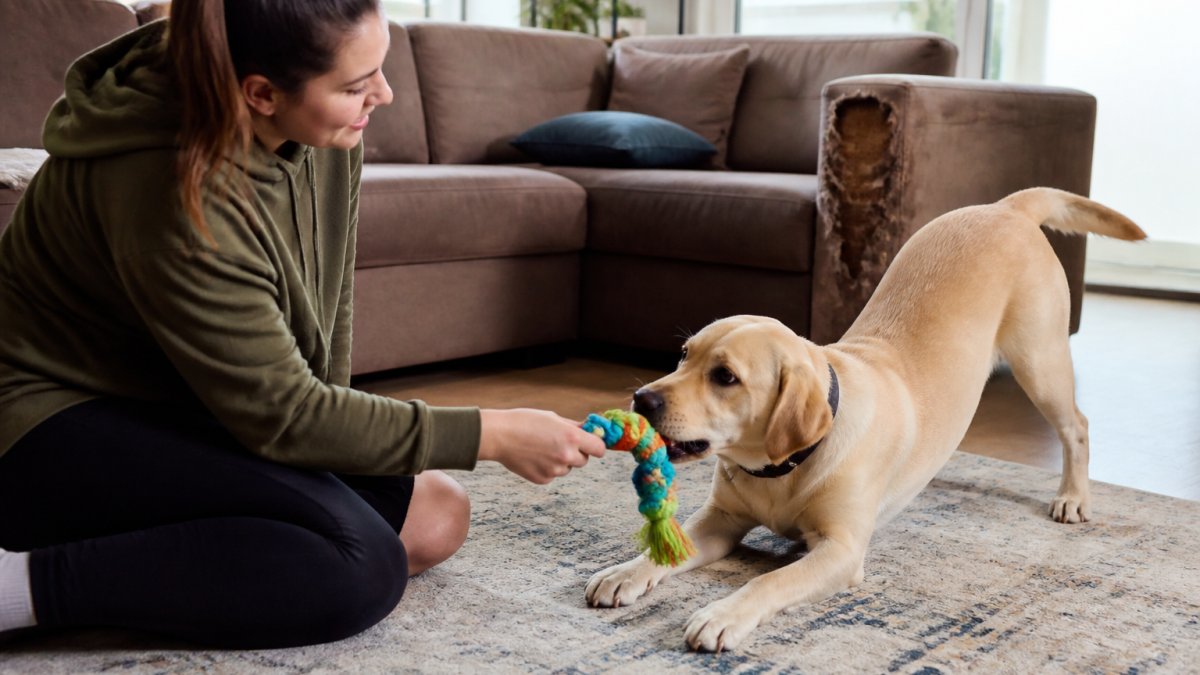
Step-by-Step Redirection Training
Start with redirection training in controlled settings. Practice when you're home and can manage the situation.
Step 1: Identify the trigger. What does your dog typically chew? The couch corner? A specific cushion?
Step 2: Set up the scenario. Put your dog near the target item.
Step 3: Wait for the behavior. Let your dog approach the furniture. Don't force it.
Step 4: Redirect immediately. Offer the toy with enthusiasm. Make it irresistible.
Step 5: Reward heavily. Praise, treats, play, whatever your dog loves.
Step 6: Repeat. Practice this cycle multiple times per day. Consistency builds the habit.
Over time, your dog learns that the toy is the better choice.
Common Mistakes to Avoid
Punishment doesn't work. Yelling at your dog after they've chewed furniture teaches them to hide the behavior, not stop it. They learn to chew only when you're not looking.
Don't redirect too late. If your dog has already done significant damage, redirection feels like a reward for chewing. Catch it early, before major destruction happens.
Avoid inconsistency. If you redirect sometimes and ignore the behavior other times, your dog gets confused. The rule must be consistent: furniture is always off-limits.
Don't use furniture-like toys. Toys that look like furniture (rope toys shaped like couch cushions, for example) send mixed messages.
Enrichment and Exercise: Reducing the Urge to Destroy
A tired dog is a well-behaved dog. Exercise and enrichment reduce destructive behavior dramatically.
Physical exercise matters, but mental exercise matters more. A 30-minute walk burns energy. A 10-minute puzzle toy session exhausts your dog mentally.
Rotate enrichment toys to keep them novel. If your dog sees the same toy every day, interest drops.
Use food-based enrichment. The Adjustable Slow-Feed Treat Dispenser from Chelsy's Toys has three hole sizes and an adjustable inner tube.

Schedule exercise and enrichment before you leave. A dog that's mentally and physically tired is less likely to destroy furniture out of boredom.
Vary your enrichment activities. Snuffling one day, puzzle solving the next, tug games the day after.
When to Consult a Professional
Most destructive chewing responds to training and management. But some cases need professional help. Know when to call a trainer or veterinary behaviorist.
Contact a professional if your dog shows signs of severe separation anxiety.
If redirection and management aren't working after 4 to 6 weeks of consistent effort, a trainer can evaluate your approach. Sometimes small adjustments in technique make a huge difference.
If your dog is destroying furniture despite having toys, exercise, and supervision, underlying anxiety or a medical issue might be the culprit. A vet can rule out health problems.
Destructive chewing is frustrating, but it's fixable. Most dogs respond well to redirection, appropriate toys, and consistent management.
| Strategy | Best For | Time Required |
|---|---|---|
| Redirection training | All destructive chewing | 10-15 minutes daily |
| Puzzle toys and enrichment | Boredom and excess energy | 20-30 minutes per session |
| Protective covers and barriers | Preventing damage during training | Ongoing |
| Separation anxiety management | Anxiety-driven destruction | Varies; may need professional help |
| Supervision and confinement | All dogs during training | Ongoing while learning |
Frequently Asked Questions
Why is my dog chewing furniture when left alone?
Dogs chew furniture when alone for several reasons: separation anxiety, boredom, excess energy, or lack of mental stimulation. If your dog only destroys items when you're gone, separation anxiety is likely the cause. Provide appropriate chew toys, increase exercise before leaving, and consider using a crate or confined space. Enrichment toys like treat dispensers can keep your dog occupied and reduce stress during alone time.
What are the best chew toys for destructive dogs?
The best chew toys for destructive dogs are durable, interactive, and engaging. Look for toys that offer mental stimulation through puzzle features or treat dispensing. The 3-in-1 Enrichment Tube ($34.99) combines a tug toy, treat dispenser, and snuffle ball in one, providing multiple ways to redirect chewing. Rotate toys regularly to maintain interest, and choose toys designed specifically for power chewers with reinforced fleece construction.
How do I know if my dog's destructive behavior is separation anxiety?
Separation anxiety typically shows as destruction focused on doorways, windows, or areas where you exit. Your dog may follow you obsessively, pace, or show signs of stress before you leave. To confirm, observe your dog with a pet camera during your absence. If destruction happens only when alone and your dog shows anxiety signals, consult a veterinarian or certified dog behaviorist. They can rule out medical issues and recommend anxiety-specific training or management strategies.
Are handmade enrichment toys actually more durable than mass-produced ones?
Handmade enrichment toys from Chelsy's Toys are backed by guarantees like the 30-day happy-dog guarantee. They provide mental engagement, which can reduce the overall cost of constantly replacing destroyed toys.