

How to Satisfy Dog Foraging Instincts: 7 Proven Methods
Table of Contents
- Why Satisfying Dog Foraging Instincts Matters
- Food Puzzles and Problem-Solving Toys
- Sniffing and Scent-Based Find-It Games
- DIY Dog Puzzle Toys for Foraging
- How to Keep Dog Occupied While Working
- Benefits of Nose Work for Dogs
- Safety, Supervision, and Preventing Ingestion Risks
- Measuring Success and Troubleshooting
- Frequently Asked Questions
Last Updated: October 9, 2026
Why Satisfying Dog Foraging Instincts Matters
Dogs don't just eat, they hunt, search, and problem-solve. At Chelsy's Toys, we believe in the power of letting dogs satisfy dog foraging instincts through play and enrichment.

A dog that forages is a dog that thinks.
Dogs evolved to spend hours sniffing, digging, and problem-solving for food. Today's pet gets a bowl filled in five seconds.
When you satisfy dog foraging instincts, your dog settles faster, sleeps better, and destructive behavior often stops because they finally have a productive outlet.
This guide covers seven proven methods to tap that drive, some free, others using purpose-built toys.
Food Puzzles and Problem-Solving Toys
Food puzzles force your dog to work for their meal, 10-15 minutes of mental engagement instead of 30 seconds of gulping.
The magic isn't the food, it's the problem-solving. Your dog tries different approaches, learns cause and effect, and feels accomplished when they succeed.
Puzzles also slow feeding, which helps dogs prone to digestive issues or bloat.
Adjustable Treat Dispensers
An adjustable treat dispenser lets you control difficulty: start easy, then increase the challenge as your dog improves.
The Adjustable Slow-Feed Treat Dispenser ($7.99) has three hole sizes and a removable divider, so you decide how fast treats come out.

How it works:
- Fill with kibble or small treats
- Your dog nudges, rolls, and manipulates it
- Treats fall out slowly as they work
Start with the largest holes so your dog learns that rolling releases food, then close some holes to keep their brain engaged.
Slow-Feed Options for Mealtime
Slow feeders aren't puzzles but barriers, dividers or obstacles that force your dog to eat around them. The food is visible, but takes longer to reach.
Use a slow feeder for every meal. This becomes routine enrichment. Your dog expects to work for their food.
Puppies and seniors start with the largest holes; adults try medium or small. Aim for 8-12 minutes per meal, not 90 seconds.
Sniffing and Scent-Based Find-It Games
Sniffing is the most powerful enrichment tool you have.
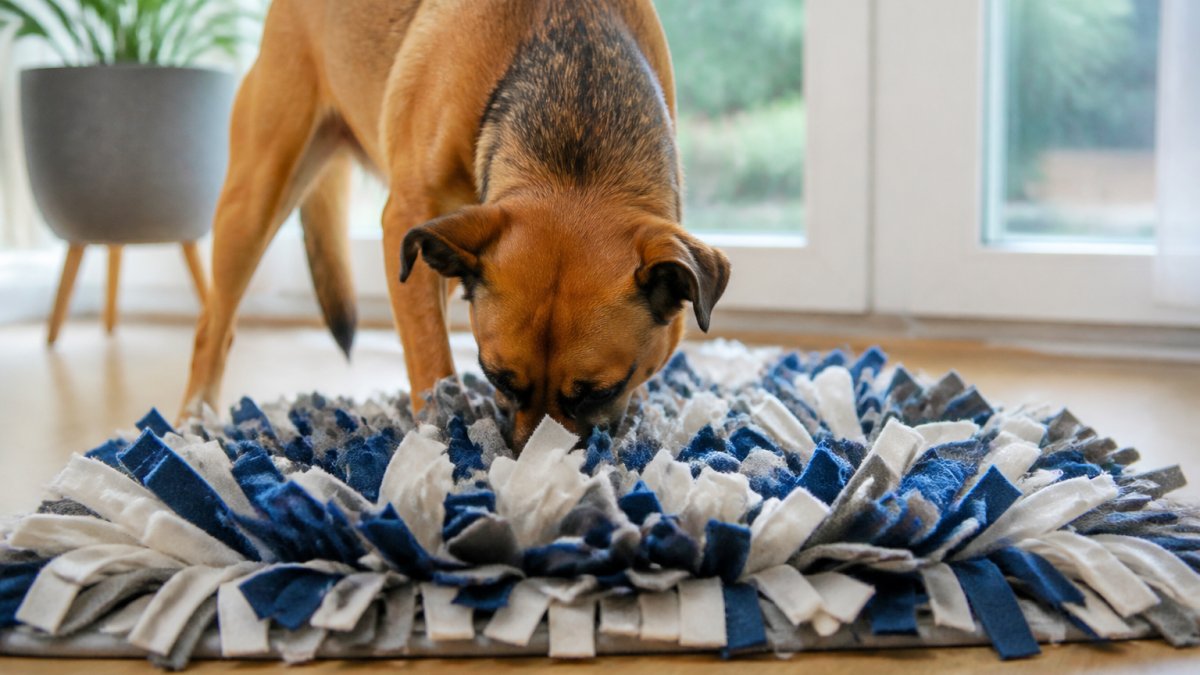
Start simple. Hide treats in obvious spots. Let your dog win quickly. They learn the game.
A 10-minute sniffing session exhausts a dog more than a 30-minute walk, their brain works at full capacity using their strongest sense.
The Chelsy's Toys Snuffle Ball ($12.99) is built for this.
How to use it:
- Scatter small treats throughout the fleece
- Show your dog the ball
- Say "find it"
Freeze it with water for teething puppies, the cold soothes sore gums while they sniff and search.
DIY Dog Puzzle Toys for Foraging
You don't need to buy anything, your kitchen has puzzle materials right now. Match the setup to your dog's skill level, then make the search slightly harder only when they consistently succeed.
Household Materials and Setup
A muffin tin and tennis balls make a classic puzzle. Put kibble in the muffin cups. Place tennis balls on top.
A cardboard box filled with crumpled paper and treats works too, your dog digs through the paper, a natural foraging behavior, to find the rewards.
A toilet paper roll filled with treats and folded at the ends becomes a puzzle toy your dog tears apart, satisfying the chewing instinct while they forage.
Step-by-Step Progression for Beginners
Start with easy wins to teach your dog that work pays off.
Stage 2: Hidden but easy. Hide treats under a light cloth or behind a chair leg so the search takes under 10 seconds.
Stage 3: Multiple hides, one room. Hide five to eight treats around a single room, starting obvious and working harder.
Stage 5: Novel locations and mixed difficulty. Hide treats in a new room, the yard, or a mix of easy and hard spots, rotating containers.
How to raise difficulty without frustration:
- Increase the number of hides before the difficulty of each hide.
- Move from visible to partially hidden before fully hidden.
- Add a container only after your dog reliably searches open floor.
- Change one variable at a time, location, container, or number of hides.
How to lower difficulty if your dog is struggling:
- Return to visible treats for a few repetitions.
- Reduce the number of hides.
- Use higher-value treats so the payoff is worth the effort.
- Move to a smaller, quieter space with fewer competing smells.
Low-Cost Alternatives to Commercial Puzzles
You can build a full rotation of foraging setups for under $10: a muffin tin, a few tennis balls, a cardboard box, a roll of paper towels, and a couple of old towels cover most of the games above.
Once your dog masters the DIY stages, the Chelsy's Toys Snuffle Ball ($12.99) is a natural next step, it combines sniffing, searching, and soft texture, and can be frozen for teething puppies.
How to Keep Dog Occupied While Working
You're at work for 8 hours. Your dog is home alone. Enrichment toys buy you time and keep their brain busy.
Adjustable Slow-Feed Treat Dispenser for Puppies and Seniors | Durable →
The 3-in-1 Enrichment Tube ($34.99) is a tug toy, treat dispenser, and snuffle ball in one.

You can also freeze toys with treats or peanut butter.
Rotate toys every few days. The same puzzle gets boring. Different toys keep engagement high.
Benefits of Nose Work for Dogs
Nose work isn't just enrichment, it builds confidence, creates focus, and strengthens your bond.
Dogs that do regular nose work are calmer, more focused during training, and less anxious. Their brains are satisfied, so their bodies can rest.
Nose work also gives shy or anxious dogs a job: instead of worrying about the world, they focus on finding treats, building confidence through success.
For working dogs and high-energy breeds, nose work is essential. Without it, they'll find their own outlets, usually destructive ones.
Safety, Supervision, and Preventing Ingestion Risks
Enrichment toys are safe when used correctly, but the difference between a safe session and a veterinary emergency comes down to three things: the material, the supervision level, and how much food goes into the dog.
Choosing Safe Materials
Fleece and sturdy fabric are safest, they flex instead of shattering or splintering. Avoid loose strings, small plastic parts, or glued-on pieces that can be chewed off and swallowed.
For DIY setups, the same rule applies. Cardboard is fine supervised but should be removed once it breaks into small pieces. Paper towel and toilet paper tubes are safe only while intact, once shredded, they're a choking hazard.
Supervision Levels by Activity
Match your attention to the risk:
- Snuffle mats and snuffle balls: Moderate supervision. Check for loose fleece strands after each session.
- Treat dispensers and slow feeders: Moderate supervision. Inspect for cracks or chewed edges weekly.
- DIY cardboard and paper setups: Direct supervision. Remove as soon as it starts to break apart.
- Frozen toys and stuffed food toys: Direct supervision until the food is finished, then remove the empty toy.
Portion Control and Nutrition
This is the part most enrichment guides skip, and it matters most for your dog's health: every treat you hide is a calorie. If you use enrichment toys during the day, reduce regular meals by the same amount.
To do the math: measure your dog's daily kibble ration in the morning and set aside one-quarter to one-third for enrichment, feeding the rest in the bowl.
Watch for digestive upset. If your dog vomits or has diarrhea after using a toy, they may be sensitive to the material or a particular treat. Switch enrichment types and reintroduce the original later, one variable at a time.
Adapting for Age, Mobility, and Health
Puppies, seniors, and dogs with limited mobility need the same enrichment at a different intensity.
Puppies: Use the largest holes on adjustable dispensers and the easiest DIY setups. Freeze a snuffle ball or stuffed toy with water for teething relief.
Senior dogs: Lower the physical demand.
Dogs with limited mobility: Bring the search to them.
Dogs with dietary restrictions: Use their prescribed food as the reward.
Troubleshooting Common Problems
Your dog destroys the toy immediately. They're not ready.
Your dog ignores the puzzle. It may not be motivating, some dogs care less about food rewards.
Your dog gets frustrated and gives up. The puzzle is too hard.
Your dog gets over-aroused. Some dogs get so excited they can't settle.
Your dog shows stress signals. Lip licking, yawning, turning away, or a tucked tail means the activity is too much.
Measuring Whether It's Working
You'll know enrichment is working when your dog settles faster, naps longer, is calmer in the evenings, and the destructive behavior decreases.
Track it: note when you use enrichment toys and your dog's behavior that day.
If a puzzle doesn't work, it's usually too hard (your dog gives up) or too easy (they lose interest).
The Adjustable Slow-Feed Treat Dispenser has food-grade materials inside and is designed for safe snacking, but still supervise, especially the first few times.
Measuring Success and Troubleshooting
Enrichment isn't a luxury. It's what your dog's brain needs to be happy and calm. When you satisfy dog foraging instincts, you're not just keeping them busy, you're giving them purpose. You're letting them be dogs.
At Chelsy's Toys, we build toys specifically for this. The Snuffle Ball, the Adjustable Treat Dispenser, and the 3-in-1 Enrichment Tube tap into natural foraging behaviors.
Frequently Asked Questions
Why is foraging important for a dog's mental health?
Foraging taps into your dog's natural hunting and searching instincts, providing mental stimulation that physical exercise alone cannot deliver. Dogs that engage in foraging activities show reduced anxiety, fewer destructive behaviors, and improved focus. A 10-minute foraging session can tire your dog's brain as much as a 30-minute walk. This mental engagement helps build confidence and gives your dog a sense of purpose and accomplishment.
How can I start teaching foraging to my dog if they've never done it before?
Begin with easy wins: scatter kibble on a blanket or hide treats in obvious spots your dog can find within seconds. Once they understand the game, gradually increase difficulty by hiding treats deeper in fabric, using puzzle toys with larger openings, or moving to new locations. Most dogs catch on within a few sessions. Start with 5-10 minute sessions and build duration as your dog's confidence grows. Use high-value treats initially to keep motivation high.
Are DIY dog puzzle toys for foraging safe, or should I only use commercial toys?
DIY toys can be safe if you use appropriate materials and supervise play. Avoid small pieces, buttons, or anything your dog can swallow. Muffin tins, towel rolls, and fabric scraps work well when monitored. However, commercial toys designed specifically for foraging, like treat dispensers with food-grade linings, remove guesswork about safety. The Adjustable Slow-Feed Treat Dispenser ($7.99) uses food-grade materials and includes adjustable difficulty levels, making it a reliable option if DIY feels risky.
How long should foraging enrichment sessions last, and how often should I do them?
Most dogs benefit from 10-15 minute foraging sessions once or twice daily. This is enough to satisfy instincts without overfeeding or creating dependency on treats. Rotate activities to keep engagement high: use puzzle toys one day, scent games the next, and DIY setups on another. Monitor your dog's behavior, if they become obsessed or frustrated, shorten sessions or reduce difficulty. Senior dogs and puppies may need shorter, gentler sessions adjusted for their age and mobility.