
Durable Enrichment Toys for Power Chewers: 6 Best Picks
Table of Contents
- What Makes a Toy Survive a Power Chewer
- Quick Comparison: 6 Durable Enrichment Toys for Power Chewers
- 1. 3-in-1 Enrichment Tube: Best All-in-One Durable Enrichment Toy
- 2. Snuffle Ball: Best for Nose Work and Foraging
- 3. Adjustable Slow-Feed Treat Dispenser: Best for Solo Enrichment
- 4. Two Hand Tug: Best for Two-Handed Tug of War
- 5. Patented Fleece Tug Toy: Best for Training and Teething
- 6. Traditional Tug Toy: Best Classic Tug (and a Real Customer Favorite)
- How to Choose Safe Dog Toys for Heavy Chewers
- Enrichment Activities for Power Chewers
- Why Material Choice Decides Longevity
- Frequently Asked Questions
Last Updated: September 30, 2026
What Makes a Toy Survive a Power Chewer
Power chewers work a toy with sustained jaw pressure rather than a few quick bites. This guide from Chelsy's Toys breaks down six durable enrichment toys for power chewers, plus the material and safety details that decide how long a toy lasts.
- Material density and give. Durable rubber and tightly interlocked fleece absorb pressure and flex back. Thin plastic and loosely stitched seams crack or split.
- Construction method. Layered knots, reinforced edges, and heavy-duty construction hold up where single-layer builds fail.
- Supervised chewing. No toy is a permanent fixture. Regular inspection and rotating toys between sessions extends their working life.
Quick Comparison: 6 Durable Enrichment Toys for Power Chewers
Each pick targets a different kind of enrichment, from nose work to two-handed tug.
Toy |
Price |
Best For |
Enrichment Type |
|---|---|---|---|
$34.99 |
All-in-one play |
Tug, snuffle, treat puzzle |
|
Snuffle Ball |
$12.99 |
Nose work and foraging |
Snuffle, tug, fetch, freeze |
Adjustable Slow-Feed Dispenser |
$7.99 |
Solo enrichment |
Problem-solving, slow feeding |
Two Hand Tug |
$29.99 |
Two-handed tug of war |
Physical play, bonding |
Patented Fleece Tug Toy |
$16.99 |
Training and teething |
Tug, training reward, freeze |
Traditional Tug Toy |
$19.99 |
Classic tug |
Interactive tug |
1. 3-in-1 Enrichment Tube: Best All-in-One Durable Enrichment Toy
The 3-in-1 Enrichment Tube is the best all-in-one pick because it covers three enrichment needs in one purchase: a hand-tied fleece tug, a treat-dispensing puzzle, and a snuffle ball. It's vet-approved and designed to reduce boredom.


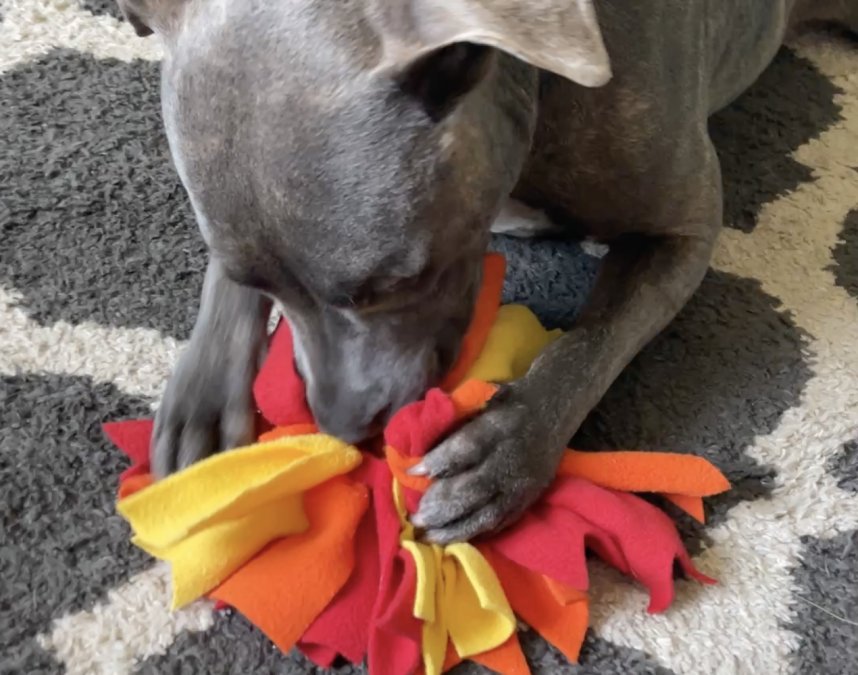
Large dog sniffing a fleece snuffle ball with kibble.
2. Snuffle Ball: Best for Nose Work and Foraging
The Snuffle Ball is the best choice for nose work and foraging because its fleece construction lets you hide treats throughout the strands and let your dog work for them. Ten minutes of sniffing tends to leave a dog calmer than a long walk.
3. Adjustable Slow-Feed Treat Dispenser: Best for Solo Enrichment
For dogs who need to work alone, the Adjustable Slow-Feed Treat Dispenser is the best solo enrichment option. Three hole sizes and a removable inner tube divider control how fast treats release, so you can dial difficulty up or down as your dog learns.

Adjustable Slow-Feed Treat Dispenser for Puppies and Seniors | Durable Enrichment Puzzle Toy for Mental Exercise and Calm Play
4. Two Hand Tug: Best for Two-Handed Tug of War
If your dog out-pulls you one-handed, the Two Hand Tug is the best option for evening the odds. The patented design lets you grip with both hands and use proper body use, which is safer for your back and gives strong dogs a real contest.
5. Patented Fleece Tug Toy: Best for Training and Teething
The Patented Fleece Tug Toy is the best pick for training and teething because it doubles as a high-value reward and a soothing chew. Fletch Technology™ stretch-and-lock construction creates over 150 interlocking knots designed to stay together through interactive play, and the rope-free design avoids the frayed fibers rope toys shed.
6. Traditional Tug Toy: Best Classic Tug (and a Real Customer Favorite)
The Traditional Tug Toy is the classic pick, and it's the toy that started it all for Chelsy's Toys back in 2006. Eighteen years later it's still a customer favorite, which says more about its build than any marketing claim.
How to Choose Safe Dog Toys for Heavy Chewers
Choosing safe dog toys for heavy chewers comes down to matching material and construction to your dog's jaw strength and play style. A toy that's too soft gets shredded; one that's too hard can damage teeth. The goal is a toy with enough give to absorb pressure without splintering or shedding fibers.
Work through this checklist before you buy:
- Check the material. Look for durable rubber, tightly interlocked fleece, or food-grade linings. Skip anything that cracks, splinters, or flakes.
- Match the size. A toy small enough to swallow is a choking hazard. Size up for large breeds.
- Confirm the build. Reinforced seams and layered knots last longer than single-layer construction.
- Plan for supervision. Interactive toys need a person present; solo toys should still be checked often.
- Set a replacement schedule. Inspect weekly and retire any toy with tears, exposed stuffing, or loose strands.
How often should I replace a durable dog toy?
Replace any toy as soon as you see wear and tear: split seams, exposed filling, or strands pulling free. For heavy chewers, a weekly inspection catches most problems before they become a choking hazard.
Signs of toy wear and tear to watch for
- Loose or broken strands on fleece toys
- Cracks or chunks missing from rubber or plastic
- Exposed stuffing or a separated seam
- Flattened or chewed-through sections
Enrichment Activities for Power Chewers
Enrichment activities for power chewers should give the dog a job, not just a distraction. A chew toy that only occupies the mouth burns physical energy. One that also engages the nose, brain, and problem-solving drive burns mental energy, and mental fatigue is what actually produces a calm dog.
Why enrichment works: the behavioral side
Most practitioners describe enrichment as meeting an animal's species-typical needs rather than simply relieving boredom. For dogs, the two biggest unmet needs in a typical home are foraging (working for food) and dissecting (taking something apart), natural behaviors modern feeding and toy design have largely removed.
3-in-1 Bundle Enrichment Tube for Dogs →
Two chew profiles, and why they need different enrichment
"Power chewer" is a useful but blunt label. In practice, two distinct profiles show up, and they need different toys and activities.
A weekly enrichment rotation
Rotate through these across the week rather than offering everything at once. Novelty drives engagement, and dogs work harder at a toy they haven't seen since last week.
- Snuffle sessions (foraging). Hide kibble in fleece strands and let your dog forage. This is the highest-value activity for most power chewers because it combines nose work with a food reward.
- Puzzle feeding (problem-solving). Use an adjustable dispenser to slow down mealtime and add a cognitive challenge. Dial the difficulty up as your dog learns.
- Tug and train (bonding + impulse control). Use a tug toy as a reward between obedience exercises. The tug becomes the paycheck, and the training becomes the job.
- Frozen chews (soothing + duration). Wet and freeze a fleece toy for teething puppies or hot afternoons. Freezing extends session length and adds a temperature element that many dogs find calming.
- Dissection play (for shredders). Under supervision, let a persistent shredder work a fleece toy apart at the knots. This satisfies the dissecting drive directly rather than redirecting it.
DIY enrichment fillers
You don't need to buy new toys to change the challenge. Safe, dog-appropriate fillers you can use in a snuffle ball or dispenser:
- Plain cooked chicken or lean meat, shredded small. High value, easy to hide.
- Plain canned pumpkin (not pie filling). Freezes well and adds duration.
- Plain yogurt or unsweetened applesauce. Good for freezing into fleece.
- Kibble soaked in warm water and frozen. The cheapest high-value filler there is.
- Dog-safe commercial treats broken into small pieces. Vary the size to vary the difficulty.
Why Material Choice Decides Longevity
Material choice is the single biggest predictor of how long a toy lasts, and the factor most buyers overlook. But "durable" isn't one property, it's three, and they trade off against each other.
The three properties that actually matter
Hardness. Measured informally by how much a material resists a scratch or thumbnail dent. Harder materials resist puncturing but transfer more force into the tooth; softer materials absorb force but wear faster.
Rubber vs. nylon vs. interlocked fleece
Material |
Hardness |
Elastic recovery |
Tear resistance |
Best fit |
|---|---|---|---|---|
Durable rubber |
Medium |
High |
High |
Sustained jaw pressure, flex-and-return chewers |
Nylon |
High |
Low |
Medium |
Persistent scrapers who work edges |
Interlocked fleece |
Low |
Medium |
High (when knots hold) |
Interactive tug, snuffle, and training reward |
A common pattern: a dog who destroys rubber in a week is often a scraper, not a biter, working an edge with his incisors rather than compressing with his molars. That dog may do better with stiffer nylon or a layered fleece build. A dog who compresses and holds does better with rubber that flexes and returns.
Reading damage patterns to set a replacement schedule
Most guidance stops at "replace when worn." That's not specific enough to be useful. The damage pattern tells you what's happening and how urgently to act.
- Micro-cracks (hairline surface fissures). The material is fatiguing. Not an emergency yet, but stop unsupervised sessions and inspect after every session. Micro-cracks become chunks.
- Chunks missing. Immediate retirement. A missing chunk means material is now in your dog's gut, and the remaining edges are sharp.
- Frayed strands on fleece. Normal wear at the ends. Trim them short so they can't be swallowed, and keep using the toy under supervision. If strands pull from the knot body rather than the tips, retire it.
- Split seams or exposed stuffing. Immediate retirement. Stuffing is the highest-risk swallowed material because it doesn't pass.
- Flattened or compressed sections that don't recover. The elastic recovery is gone. The toy will fail soon; replace it on your schedule, not your dog's.
Frequently Asked Questions
What features should I look for in durable enrichment toys for power chewers?
Look for dense, food-grade materials, reinforced stitching, and a design that gives your dog a job to do rather than just something to bite. Size matters too: a toy that is too small can become a choking hazard, while one that is too large is hard to grip. Avoid thin plastic squeakers and loose rope fibers. Fleece tugs built with interlocking knots, like Chelsy's Toys' Fletch Technology, hold together through tug sessions while staying soft on teeth and gums.
Are any dog toys truly indestructible?
No toy is indestructible, and any brand claiming otherwise is overselling. Every toy wears down eventually, especially with sustained chewing from a strong jaw. The goal is chew resistance, not permanence. Choose a toy that holds its shape through many sessions, inspect it regularly for tears or loose pieces, and replace it once damage appears. Supervised chewing is the single biggest factor in keeping play safe, no matter how tough the toy claims to be.
How do enrichment activities for power chewers reduce destructive behavior?
Destructive chewing usually comes from boredom or pent-up energy, not bad behavior. Enrichment activities give your dog a legal outlet: sniffing, searching, problem-solving, and tugging all burn mental energy. Ten minutes of focused nose work can leave a dog more settled than a long walk. Rotating toys like a snuffle ball, treat dispenser, and tug keeps the challenge fresh, so your dog stops looking for entertainment on your furniture.
How do I know when to replace a durable chew toy?
Check your dog's toys after every session. Replace anything with torn seams, exposed stuffing, cracked plastic, or pieces your dog can pull off and swallow. For power chewers, a reasonable replacement schedule is every few weeks for soft toys and several months for tougher ones, but the toy's condition matters more than the calendar. If you see wear and tear, retire the toy. Chelsy's Toys backs its products with a 30-day happy-dog guarantee, so you can reach out if something fails early.
Can I use the same enrichment toy for a small dog and a large dog?
Often yes, with supervision. The 3-in-1 Enrichment Tube is built for curious pups and dogs of all sizes, and the Snuffle Ball works for puppies, adults, and seniors. The bigger issue is jaw strength: a large power chewer can damage a toy faster than a small dog, so check the toy after each session and adjust treat size to match the dog. If you have both sizes at home, buy one toy per dog to avoid resource guarding.