

Best Puzzle Toys for Bored Dogs: 2026 Enrichment Guide
Table of Contents
- Why Bored Dogs Need Puzzle Toys (And How to Tell)
- Quick Comparison: Best Puzzle Toys for Bored Dogs
- How to Use Snuffle Balls for Dogs: A Complete Guide
- Mental Stimulation for High Energy Dogs: Matching Toys to Drive
- Puppy Teething Relief Toys: Safe Enrichment for Growing Pups
- Puzzle Toys for Dogs: Choosing the Right Difficulty Level
- Safety, Cleaning, and Maintenance for Puzzle Toys
- Conclusion: Building a Rotation That Works
- Frequently Asked Questions
Last Updated: October 1, 2026
Why Bored Dogs Need Puzzle Toys (And How to Tell)
A bored dog is not a relaxed dog. That restless pacing, the chewed baseboard, the barking at nothing, all of it points to an animal with energy and nowhere to put it. The best puzzle toys for bored dogs give that energy a job, tapping into the foraging and problem-solving instincts every dog still carries from its ancestors.
Signs Your Dog Is Under-Stimulated
Under-stimulation shows up as behavior, not boredom. Dogs cannot tell you they need a challenge, so they improvise.
Watch for these signals:
- Destructive chewing on furniture, shoes, or baseboards
- Pacing, whining, or staring at you for no clear reason
- Digging at carpets or scratching at doors
- Barking at sounds, shadows, or nothing at all
- Following you room to room, unable to settle
Quick Comparison: Best Puzzle Toys for Bored Dogs
Here is how the four core enrichment styles compare, so you can pick the right starting point before reading the full breakdown.
| Toy Type | Best For | Challenge Level | Key Feature |
|---|---|---|---|
| Adjustable Treat Dispenser | Puppies and seniors | Adjustable | Three hole sizes, removable divider |
| Snuffle Ball | Nose work and calm settling | Moderate | Center knot, pierce and tie-down options |
| 3-in-1 Enrichment Tube | All-around play | Moderate to high | Tug, dispense, and snuffle in one |
| Puppy Teething Pack | Teething puppies | Gentle | Freezer-ready fleece, five tugs and five balls |
How to Use Snuffle Balls for Dogs: A Complete Guide
A snuffle ball is a fleece toy built to hold treats inside its folds so your dog works the nose to find them. The value is in the search, not the snack. Ten minutes of sniffing engages more of the brain than a quick bowl of kibble ever will.

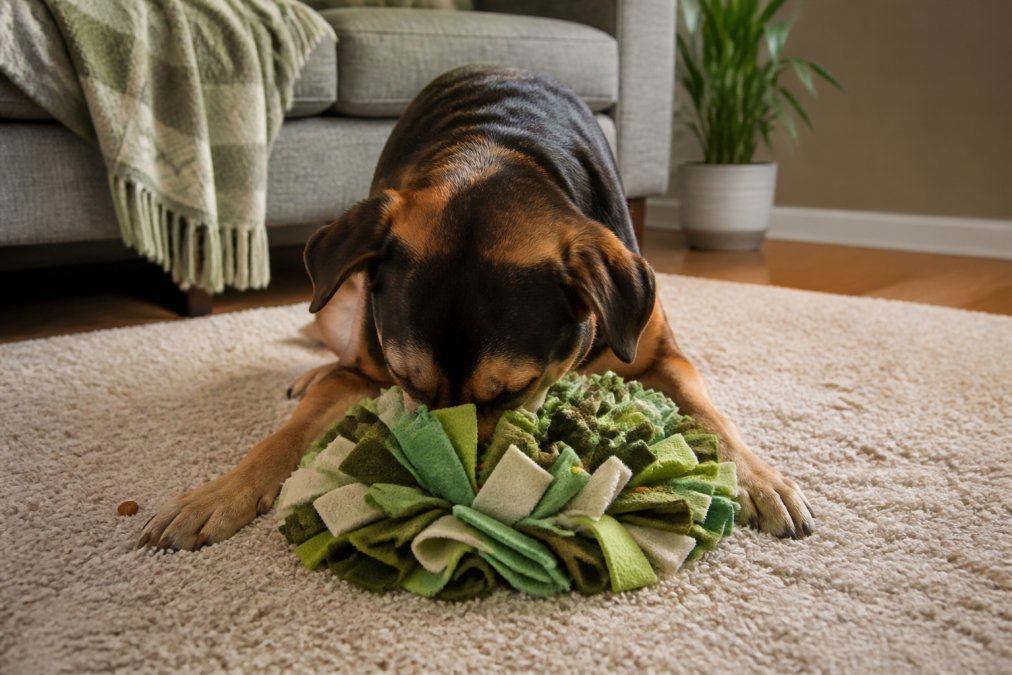
Stuffing, Piercing, and Tie-Down Techniques
Snuffle balls can be loaded three ways, and each one suits a different dog.
- Center stuffing: Tuck small treats into the middle for a quick, easy win. Best for beginners and seniors.
- Piercing: Push longer treats like bully sticks through the fleece so your dog works to extract them. Ideal for determined chewers.
- Tie-downs: Tie medium treats down with two strands. This is excellent for dog nibblers who would otherwise gulp and quit.
Wet and Freeze for Extra Challenge
Saturate the tug or snuffle ball with water and freeze it. For puppies, this turns the toy into a cooling teether that soothes sore gums. For adults, the frozen version slows the whole game down, stretching a five-minute activity into twenty.
Mental Stimulation for High Energy Dogs: Matching Toys to Drive
High-energy dogs need a job, not just a toy. The trick is matching the toy to the drive your dog already has, because a herding breed and a scent hound want very different challenges.
Puppy Teething Relief Toys: Safe Enrichment for Growing Pups
Teething puppies chew because their gums hurt, so the goal is redirecting that urge onto something safe and soothing. Soft fleece beats hard plastic for tender mouths, especially in the early weeks.
Puzzle Toys for Dogs: Choosing the Right Difficulty Level
The right difficulty level is the one your dog can solve in about five minutes but not in thirty seconds. Too easy and the toy gets ignored; too hard and your dog gives up and looks for the couch to destroy. But before you adjust difficulty, you need to know what you are actually solving for.
Is It Boredom, Anxiety, or Just Not Enough Exercise?
Destructive behavior gets labeled "boredom" by default, yet the fix differs depending on the cause. Run this quick assessment before you buy another toy.
- Boredom: The behavior happens mostly when your dog is awake and under-challenged. Your dog settles after a puzzle or training session, and the chewing or pacing is worse on days with less activity.
- Separation anxiety: The behavior clusters around your departures and absences. You may find damage near doors or windows, reports of barking or howling while you are gone, and a dog that cannot settle even with a stuffed toy.
- Lack of physical exercise: Your dog is restless at predictable times, responds well to a walk or fetch session, and shows no anxiety around departures. Puzzle toys help, but they are not a substitute for physical output.
A Progressive Plan That Levels Up Problem-Solving
Most articles list products; few explain how to build skill. Use this four-week progression, and only move forward when your dog solves the current stage in under five minutes.
Adjustable Slow-Feed Treat Dispenser →
- Week one, obvious wins: Scatter kibble loosely across fleece or use the largest dispenser opening. The goal is confidence, not challenge.
- Week two, tighter searches: Push treats deeper into snuffle folds, use smaller treats, and switch to the medium dispenser hole. Expect more nose work and less pawing.
- Week three, extraction: Add piercing with longer treats like bully sticks, or tie medium treats down with two strands. This is where dog nibblers learn to work instead of gulp.
- Week four, frozen and rotated: Wet and freeze the tug or snuffle ball to slow the game, then rotate toy types so your dog cannot memorize one solution.
Matching Difficulty to Age and Drive
- Puppies: Start with loose scattering and frozen fleece for teething relief. Skip tie-downs until adult teeth arrive.
- Seniors: Keep rewards obvious and sessions short. Nose work is often easier than paw manipulation.
- High-drive dogs: Combine a tug outlet with a dispenser so the dog gets physical and mental work in one session.
- Not food-motivated: Hide a favorite toy inside the snuffle folds instead of treats. The search becomes the reward.
The Adjustable Slow-Feed Treat Dispenser supports this plan with three hole sizes and a removable inner tube divider that control release speed. It also doubles as a slow feeder for dogs that inhale their meals.

Safety, Cleaning, and Maintenance for Puzzle Toys
Fleece enrichment toys are interactive tools, not chew toys. That distinction drives every safety and maintenance decision below.
Pre-Session Inspection
Check these points before every session:
- Seams and knots: Look for loose stitching, frayed edges, or knots that have pulled apart. A compromised center knot can release treats too easily or expose stuffing.
- Fleece integrity: Run your fingers over the folds. Any tear longer than a thumbnail is a stop-use signal.
- Treat remnants: Old food stuck in folds can mold. Remove leftovers before storage.
- Hardware: If your toy uses a dispenser tube, confirm the divider and openings are secure and free of cracks.
Treat Size and Chewer Safety
Match treat size to your dog every time:
- Too small for a large dog: Can be swallowed whole. Use treats larger than your dog's throat diameter.
- Too large for a small dog: Becomes frustrating rather than fun. Break treats down to pea-sized or smaller for toy breeds.
- Bully sticks and long chews: Pierce them through fleece only under supervision. Remove the chew when it becomes small enough to swallow.
- Tie-downs: Use two strands and check the knot after each session. Dog nibblers may work the same knot for a long time.
Cleaning Routine
- Frequency: Wash after every two to three sessions, or sooner if the toy held raw or perishable treats.
- Method: Machine wash warm with towels. Avoid fabric softener, which can coat fleece and reduce its ability to hold treats.
- Drying: Tumble dry low or air dry. High heat can shrink fleece and weaken seams.
- Frozen toys: Thaw before washing so ice does not damage the drum or the fabric.
- Rotation: Keep at least two toys in rotation so one can dry while the other is in use.
When to Retire a Toy
Retire a puzzle toy when:
- Seams have been repaired twice.
- Fleece has thinned to the point where treats fall through.
- Your dog has chewed through a layer and reached the interior.
- The toy no longer holds its shape after washing.
A retired snuffle ball can sometimes be repurposed as a supervised tug, but once structural integrity is gone, replacement is the safer choice.
Conclusion: Building a Rotation That Works
Boredom is not solved by one toy. It is solved by a rotation that keeps changing the challenge, the reward, and the game itself.
Frequently Asked Questions
What is the best toy to keep my bored dog entertained?
The best puzzle toys for bored dogs combine mental challenge with a physical reward. Snuffle balls that hide kibble or treats engage natural foraging instincts, while adjustable treat dispensers let you increase difficulty as your dog learns. For high-energy dogs, a rotation of three to four different toys prevents boredom with any single option. Look for durable materials and adjustable difficulty settings so the toy grows with your dog's skills.
Are puzzle toys really good for dogs?
Yes. Puzzle toys provide mental stimulation for high energy dogs by mimicking natural problem-solving and foraging behavior. Ten minutes of focused sniffing or treat extraction can tire a dog as much as a longer walk because it engages the brain. This kind of active engagement reduces destructive behavior, supports cognitive function, and gives dogs a productive outlet for energy. The key is matching difficulty to your dog's skill level so they stay challenged without getting frustrated.
How do I use a snuffle ball for my dog?
Start by hiding small treats or kibble throughout the fleece strands. You can pierce the ball with longer treats like bully sticks, stuff smaller treats into the center, or tie down medium treats with two strands for dogs that nibble. For puppies, wet the ball and freeze it for teething relief. Always supervise play and remove the toy when finished to keep it exciting for the next session.
Can puzzle toys help with separation anxiety?
Puzzle toys can help reduce mild separation anxiety by giving dogs a calming activity before you leave. A frozen snuffle ball or treat dispenser occupies your dog during the first few minutes of alone time, which is often the most stressful period. However, severe separation anxiety needs a behavior plan from your veterinarian or a certified trainer. Puzzle toys work best as part of a broader routine that includes exercise, predictable schedules, and gradual alone-time training.
How do I clean and maintain puzzle toys for dogs?
Most fleece-based puzzle toys are machine washable. Remove all food or treat remnants before washing, then wash and dry with towels to refresh the fabric. For treat dispensers with inner tubes, wipe the inside with a damp cloth. Inspect toys regularly for damage and discontinue use if you find rips or loose pieces. Rotating toys between sessions and storing them out of reach helps them last longer and keeps your dog interested.